


If we can no longer directly recognise technical craftsmanship in an image, how do we assess the artistry behind it?
With a painter, we can study the brushwork. With a photographer, we recognise the use of light, composition and perspective. Mastery of the medium is often visible in the result.
But with an AI-generated image, this becomes more complicated. We cannot see how much knowledge, experience and how many artistic decisions went into creating it. An image can be generated in seconds, but it can also be the result of weeks of experimentation and refinement.
This question relates to my own artistic practice.
For 25 years, I have worked across different media, from digital drawings and photography to glass, metal, sculpture and light. AI has now become another medium in my practice.
Because I do not work within a single discipline, I am difficult to place in an established art category. But my artistic signature does not lie in mastering one particular technique.
It lies in my concepts.
My body of work consists of 17 series in which themes such as perception, nature, memory, time and perspective recur from different angles.
The techniques vary, but the underlying ideas provide the connection between them.
Perhaps AI makes it necessary to reconsider how we understand artistic craftsmanship. When technical execution no longer directly reveals what the artist has contributed, the underlying artistic idea becomes more important to examine. An artist’s body of work can also play a role in this.
One example is Different Perspectives (2018), in which I explore light, time, space and perception. Four programmed LED light installations were exhibited in 2020 as part of the group exhibition On the Move! Beweging in de hedendaagse kunst at the Gorcums Museum.
Each installation visualised a different natural phenomenon and included a QR code linking to a slideshow with related images and information.
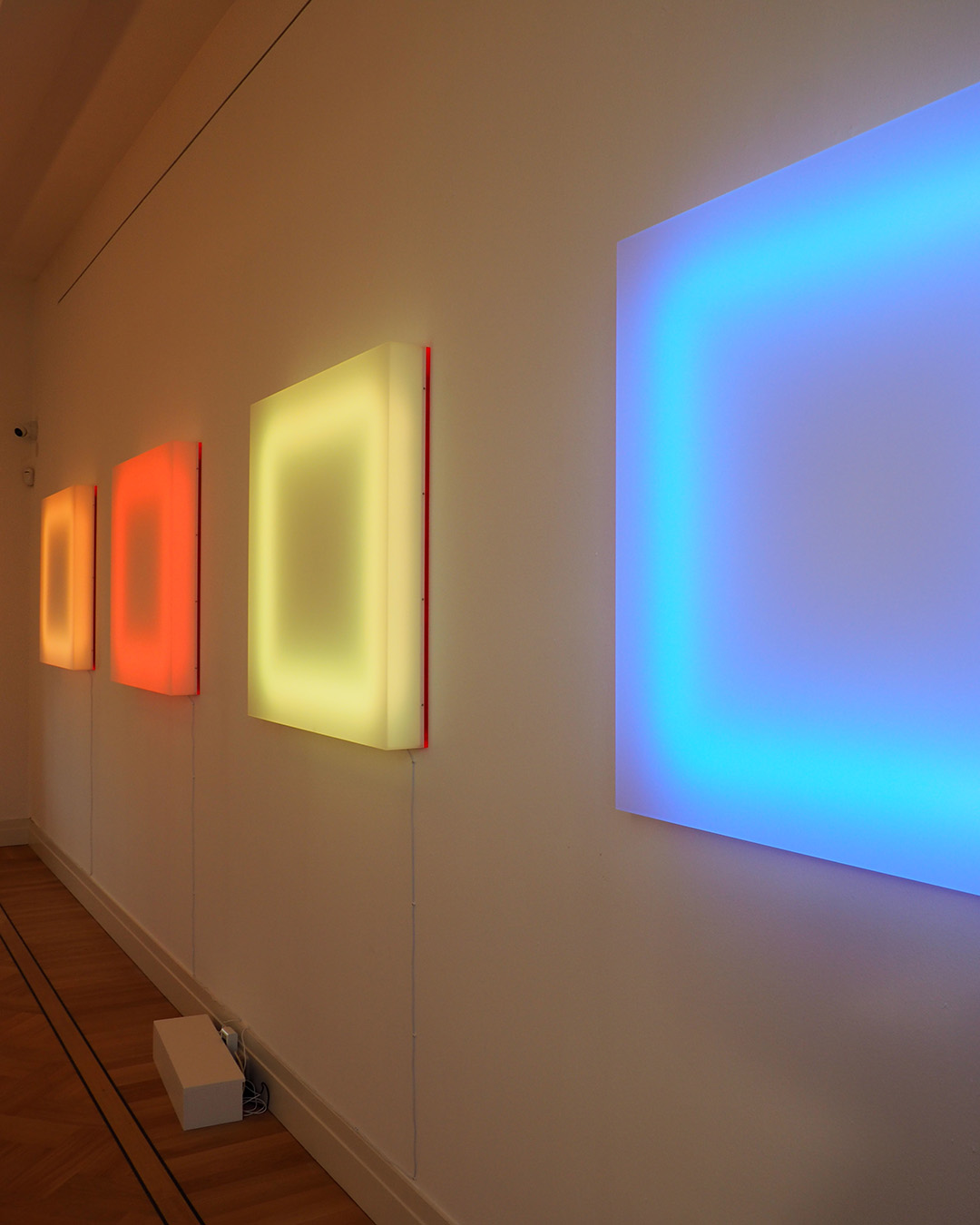
The group exhibition was made possible in part by the Mondriaan Fund. For my LED installations, I used an interest-free loan from Fonds Kwadraat.


One of these works, From Dusk Till Dawn (2019), simulates the transition from day to night over a period of 24 hours. The starting point was not the technology, but my exploration of time and perception. The programmed LED lighting made it possible to give form to that idea.
By considering my work in relation to my existing body of work, it becomes clear how the concepts develop across different media.
This does not automatically make an artwork good. Just as a long artistic career is no guarantee of quality. But it does provide a broader context in which we can assess the work.
Perhaps the challenge of AI is therefore not only whether a machine can produce a technically convincing image. It is also about what an artist wants to explore, express or communicate through that image.
This does not have to be visible solely in the technical execution. It can also be recognised in the ideas, the decisions and the connections between different works. And an artist does not need to have developed an extensive body of work for this. A single artwork can also contain a strong artistic idea.
AI does not necessarily change what it means to be an artist, but it does raise the question of how we recognise and assess artistic craftsmanship.
Perhaps, when looking at AI art, we should ask not only how an image was made, but also why it was made and what place it holds within the artist’s creative development.

Reacties