


Not everything that is technically possible is artistically desirable.
Since 2001, digital drawings have formed the foundation of my artistic practice. As early as 1991, during my studies, I consciously chose Illustrator while all my fellow students chose Photoshop. I didn’t want to make reality look more beautiful than it was. I wanted to draw it myself.
Using gradient meshes, I developed my own technique for creating photorealistic images.
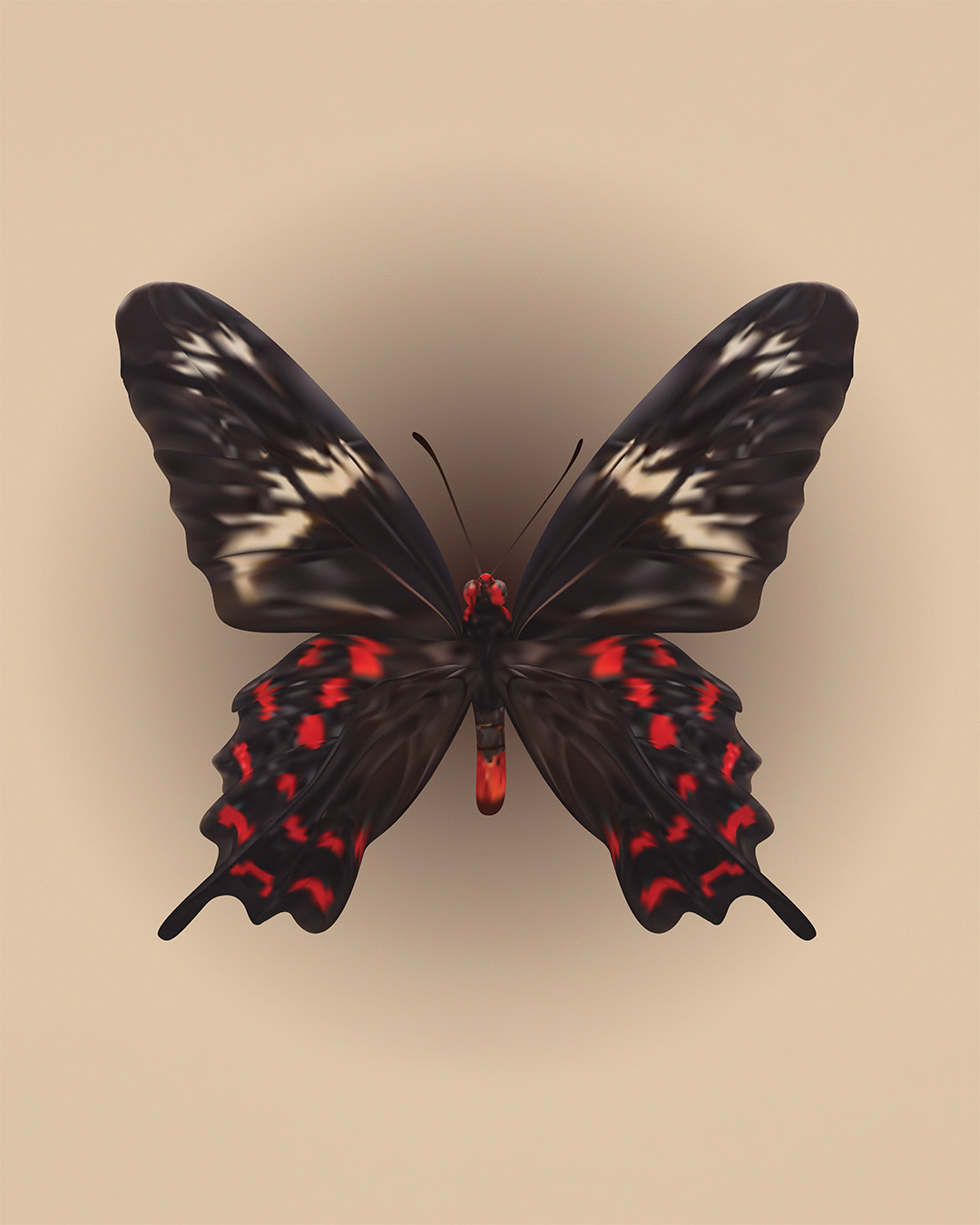
I precisely determine every point, every handle and every colour transition. At the same time, the natural subject determines where I place the points and handles. I follow the shapes and structures found in nature.
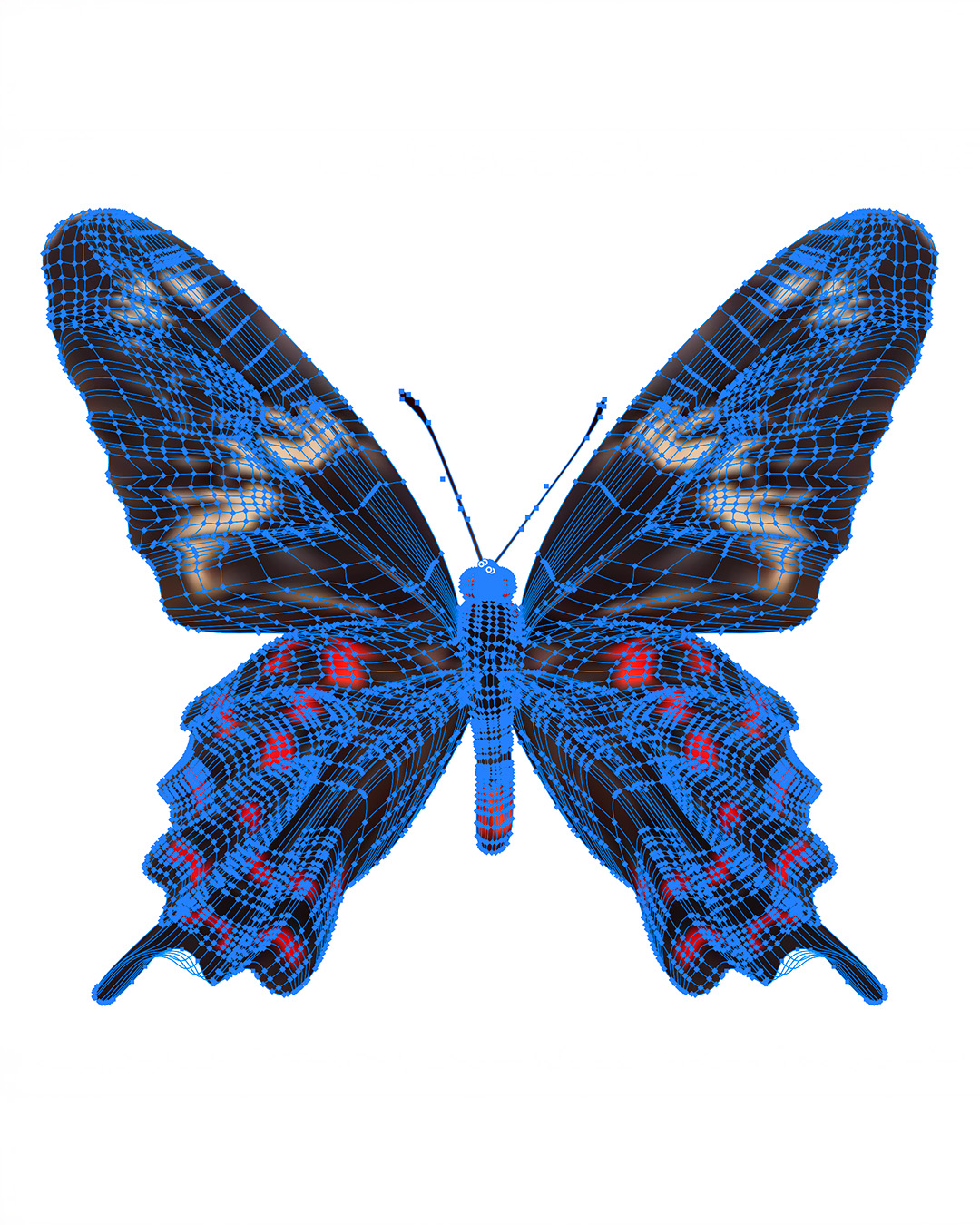
I never know in advance what will emerge. It is precisely through my working process that images arise which surprise even me.
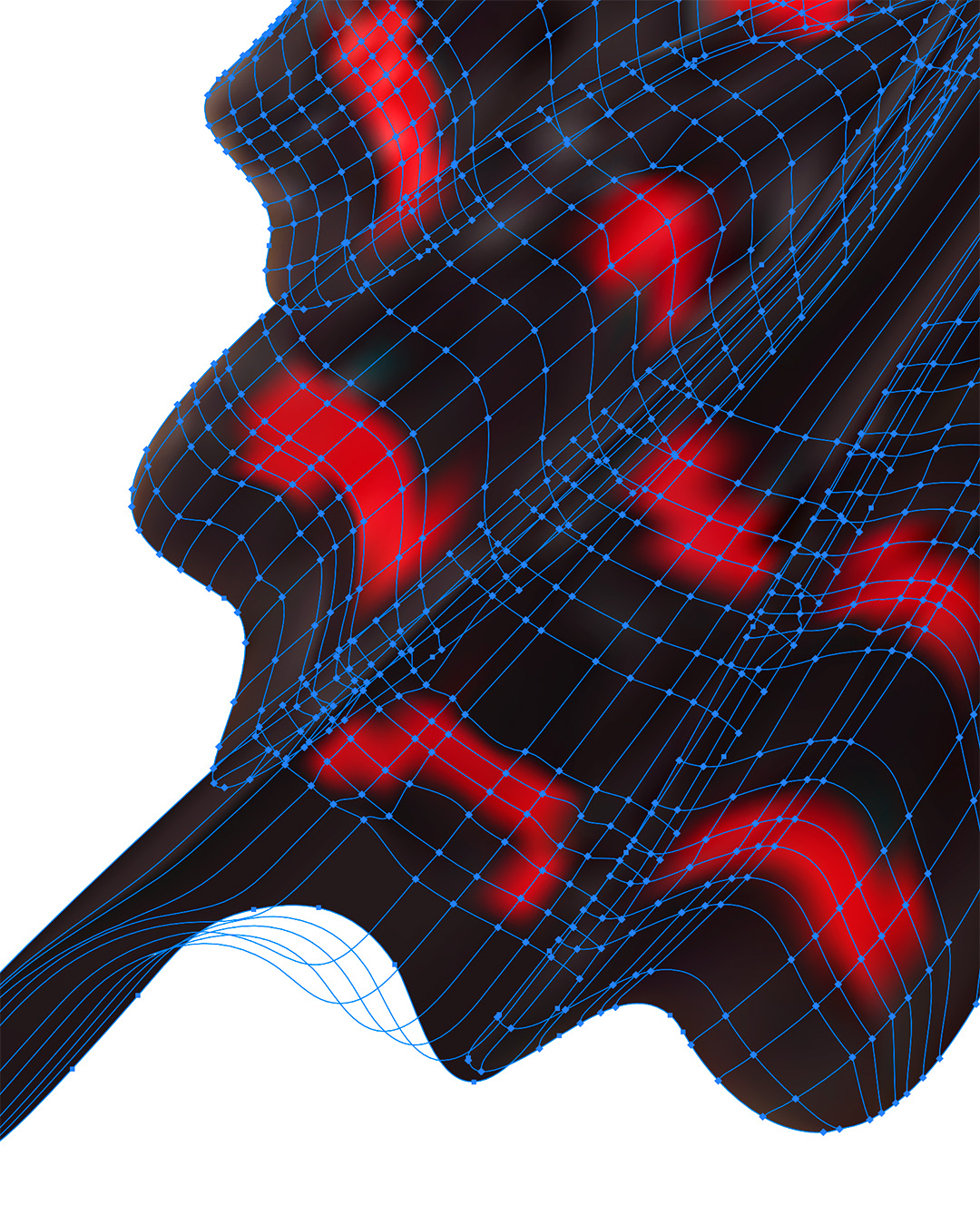
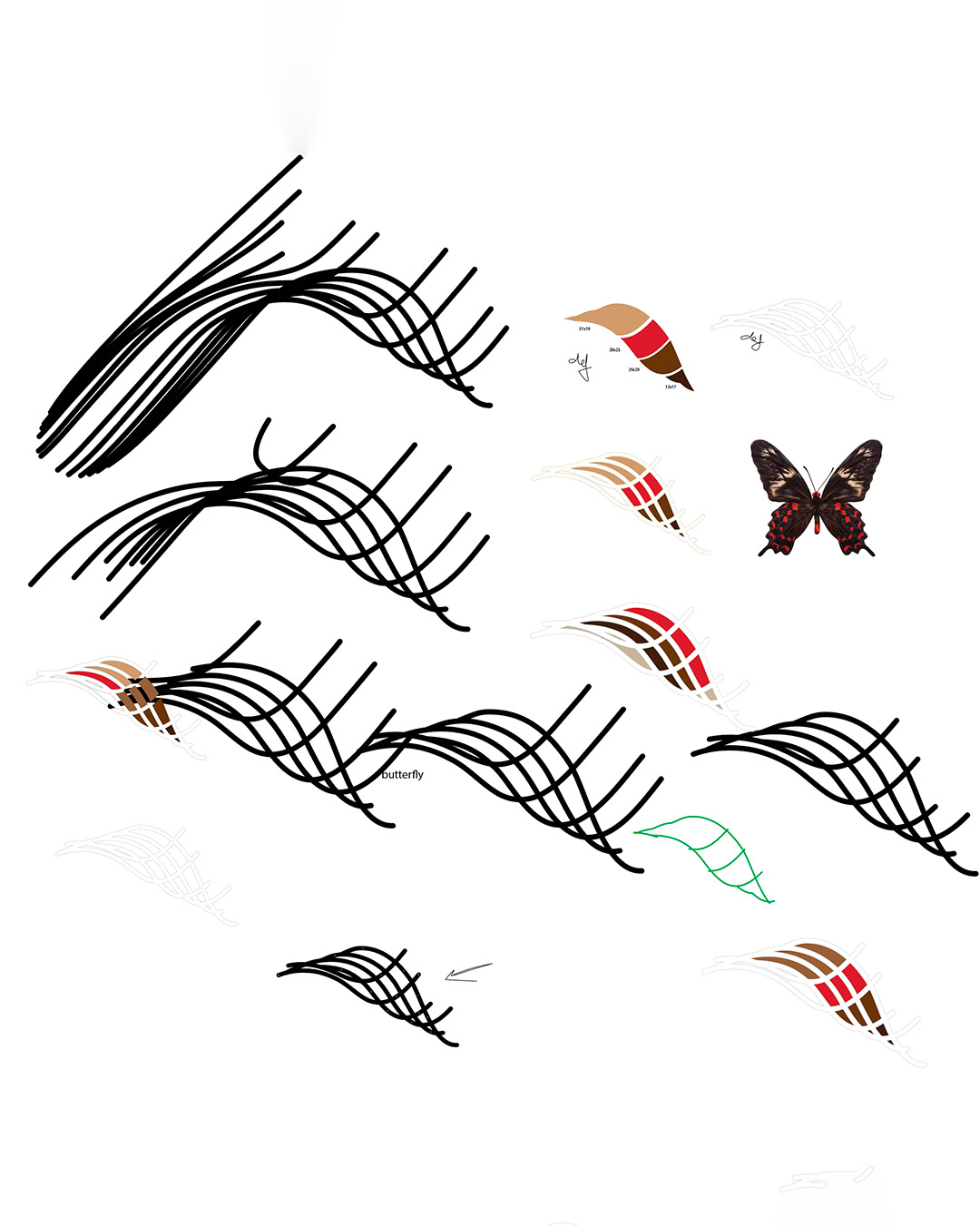
By greatly enlarging a detail from the digital structure, new organic forms emerge that become detached from the original image. That detail may even lie outside the original contours of the butterfly. Even there, lines and connections emerge that, when viewed in isolation, still carry something of the character and movement of a butterfly.
Which detail I choose is an artistic decision. I cannot predict which forms I will discover. For me, that is precisely where the surprise lies.
The blue lines of a gradient mesh are normally construction lines that are not visible in the final image. I turn these construction lines into actual, visible lines. In doing so, the technical structure itself becomes part of my visual language.
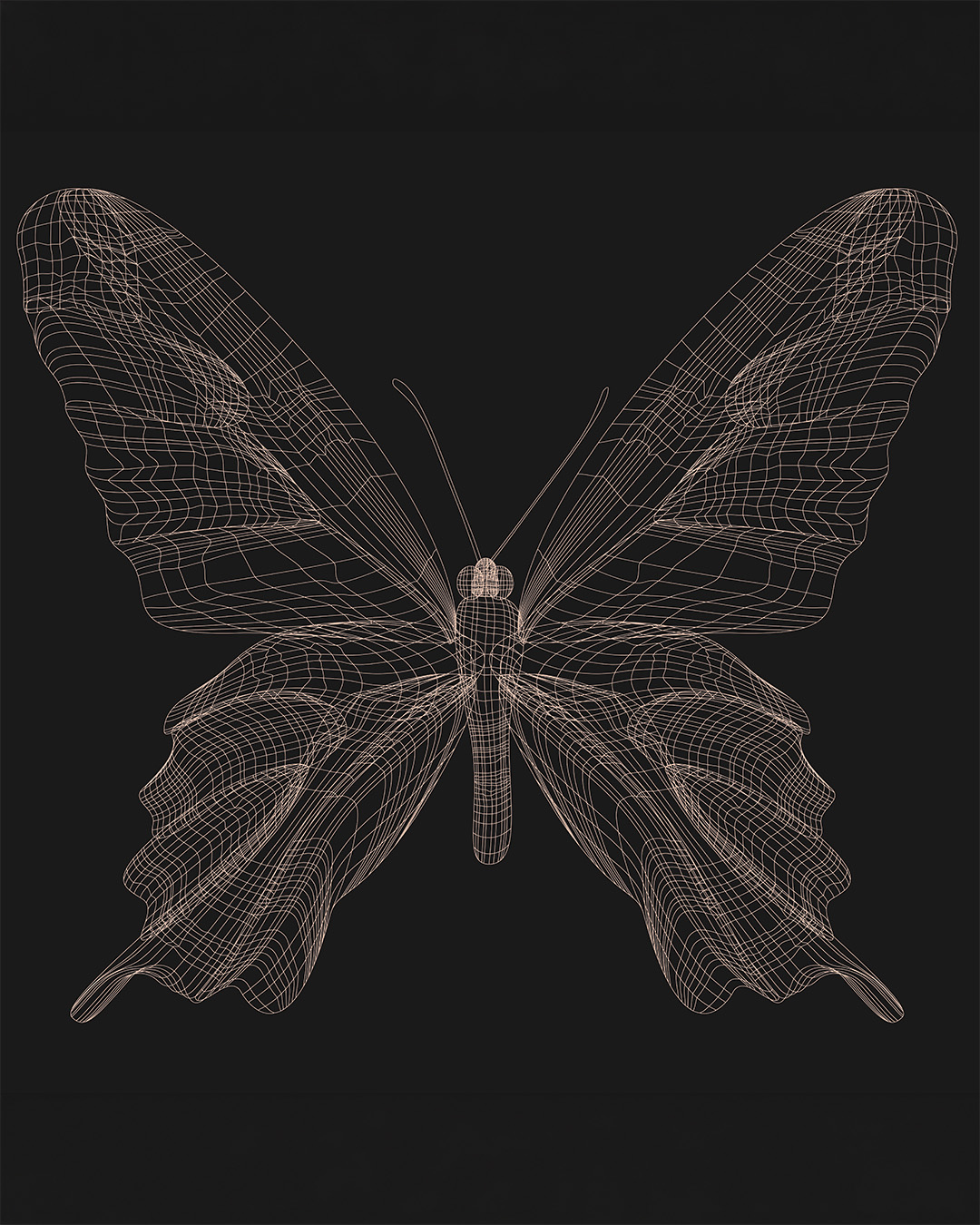
I then give the lines thickness, turning the digital drawing into the basis for a three-dimensional work.
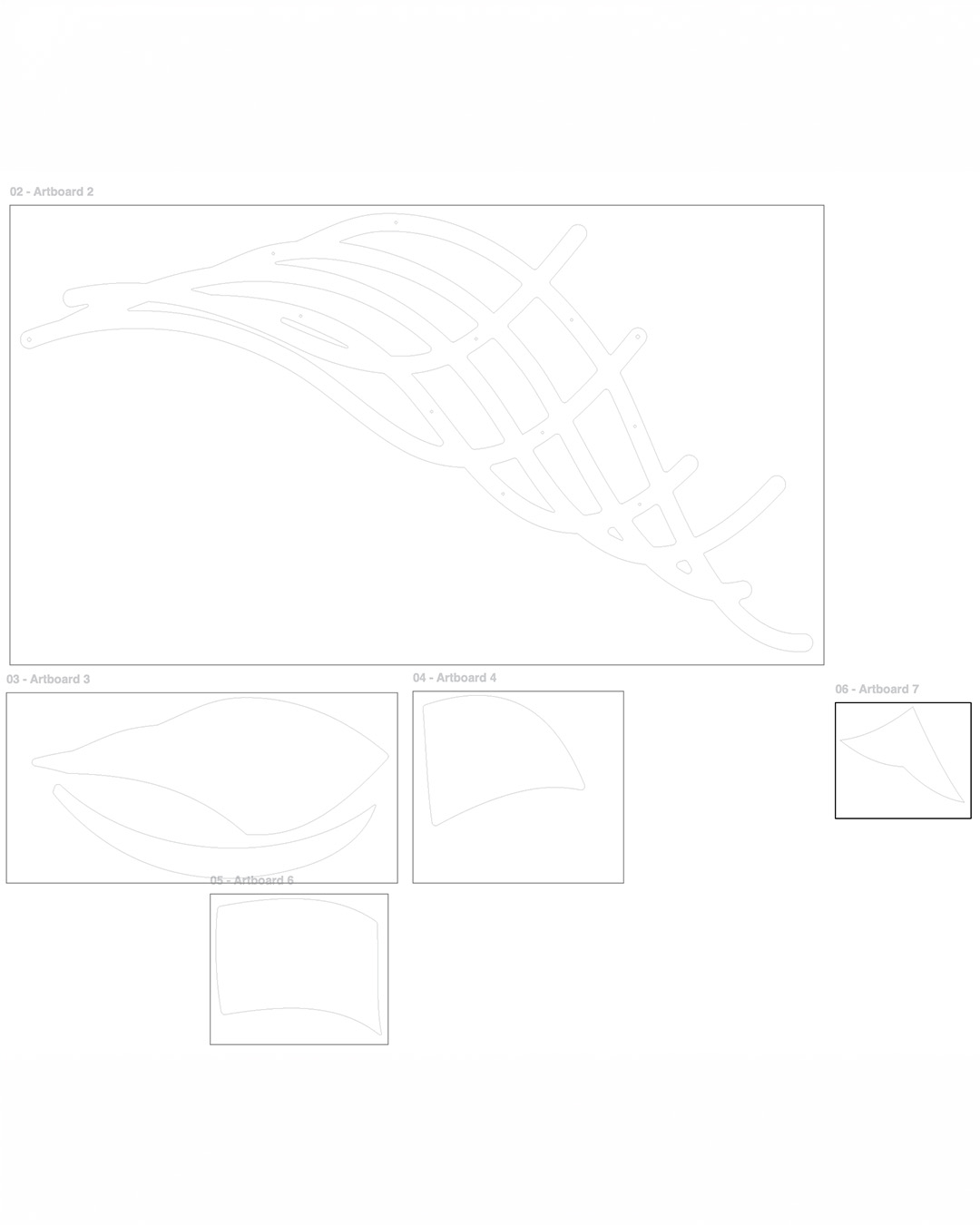
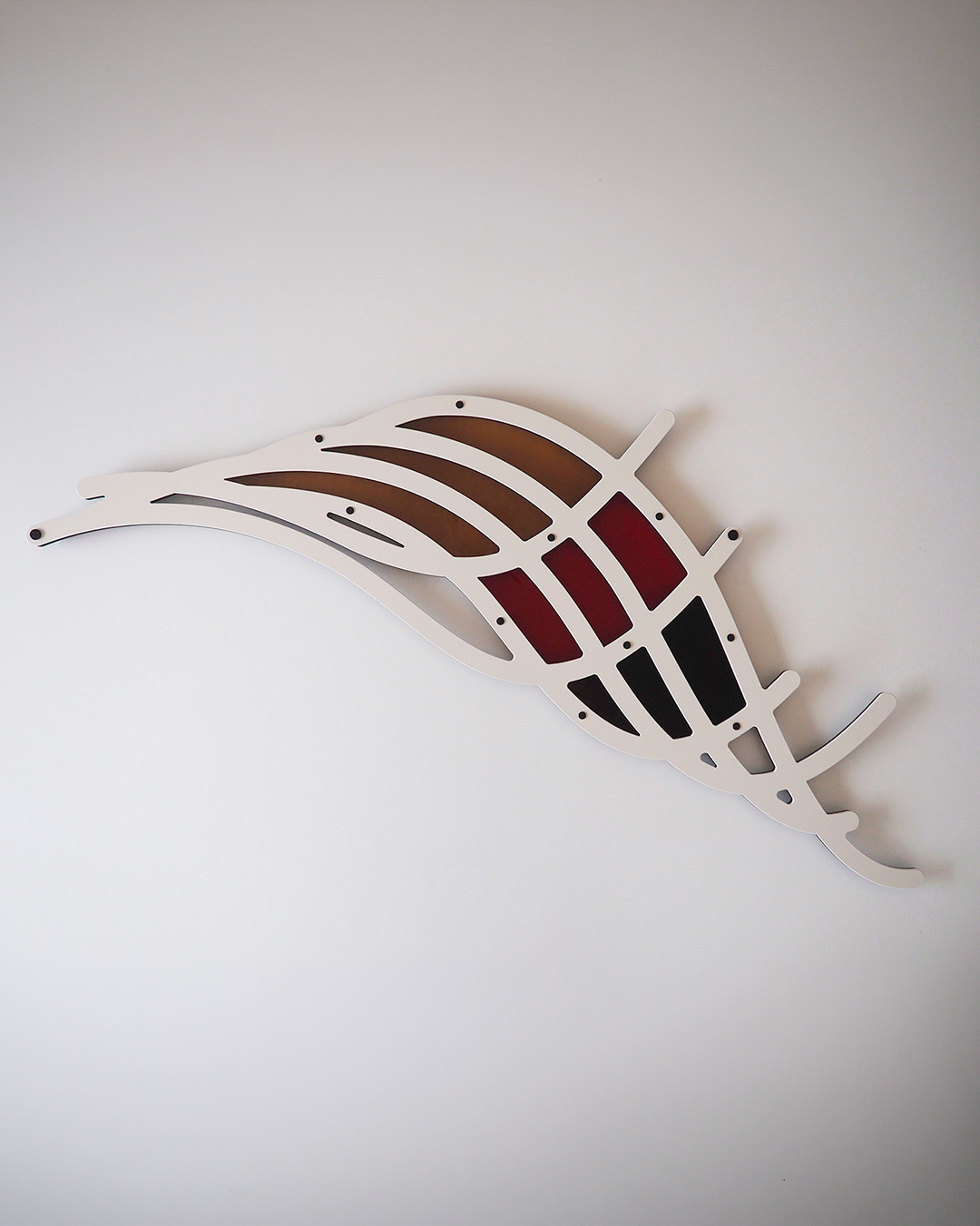
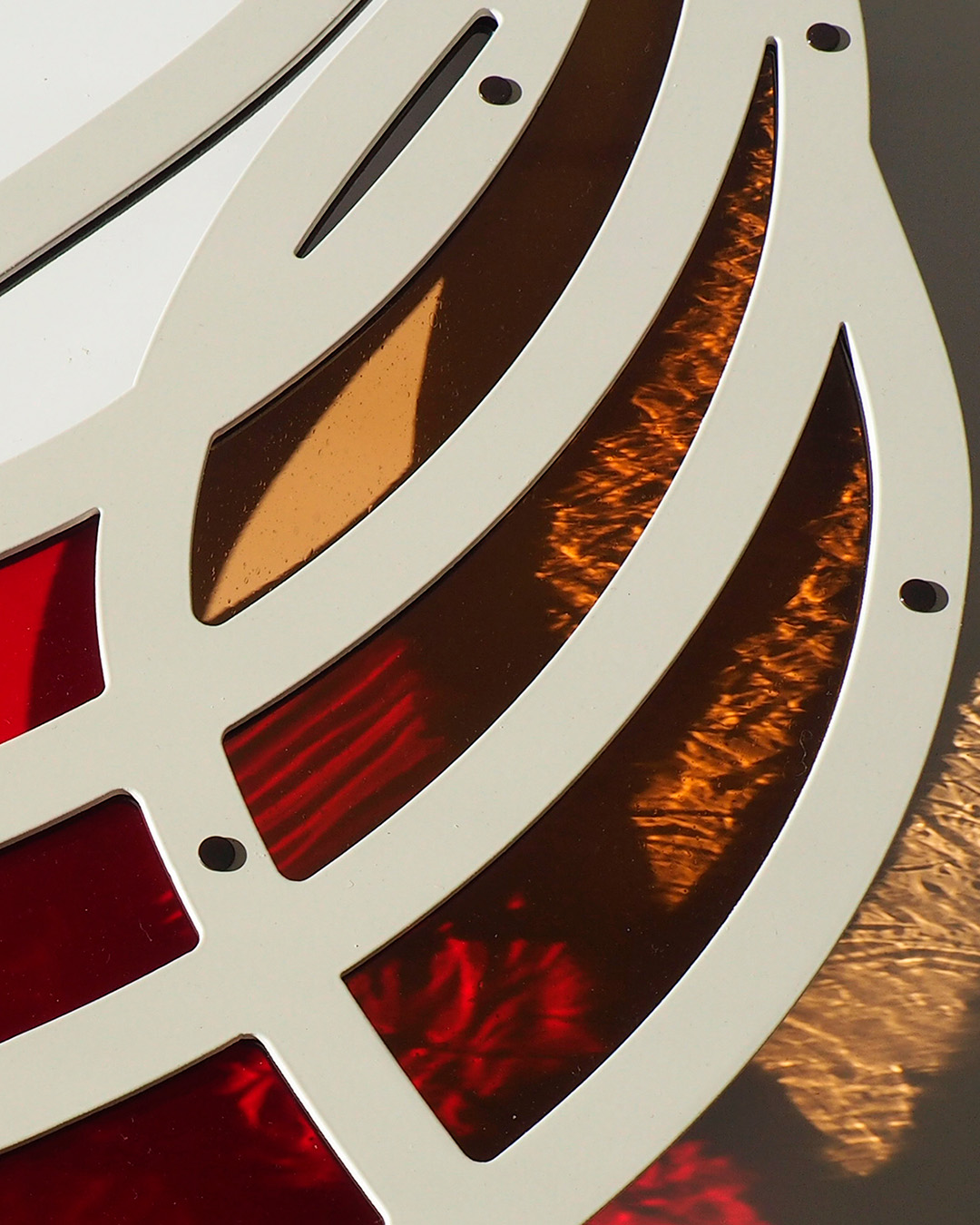
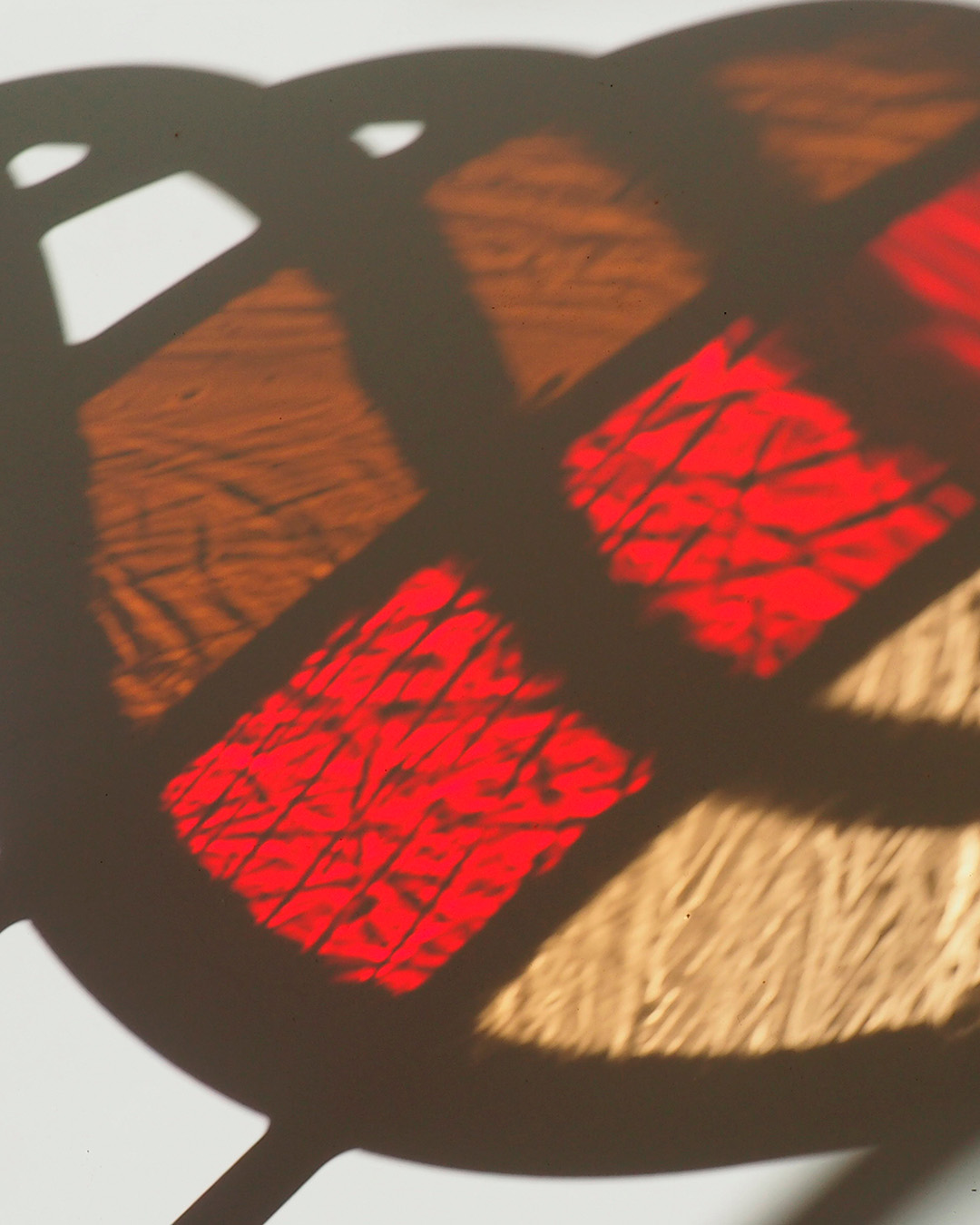
For the final sculpture, I use waterjet-cut metal and Lamberts glass. I select the glass in the colours of the original butterfly and cut it to size with extreme precision, also ensuring that it fits between the metal frames.
I have explored whether AI can independently follow this process and reproduce the specific visual language of my line-based works. So far, it cannot. AI can generate lines, but it does not know which unexpected connections reveal the essence of the butterfly to me. The generated lines lack the organic structures found in nature, the precision and the coherence of my manually constructed drawings.
AI can also generate surprising images. But random lines do not constitute a visual language. In my work, every line originates in the structure of the natural subject. When that coherence is missing, something fundamentally different emerges.
I don’t want an approximation of my visual language. I want the visual language itself.
With my ongoing slow movie, Fam.Li visits … Baarnse Bos (@heartworldbypetrahart), it is different. Here, AI offers me opportunities to further develop existing artistic ideas. I can create my own reality, where nature, historical facts and imagination come together.
Here, too, an image does not simply appear. I give precise instructions, evaluate the result and make adjustments where necessary. Just as with drawing or painting, I decide when an image is finished.
My experiments with my line-based works have above all confirmed that a medium does not have to be suitable for every artistic idea.
I do not judge a medium by its capabilities in general, but by whether it can realise my artistic intention.

Reacties