


What we see doesn’t have to actually exist to move us.
My niece was not yet three when she regularly looked through my Fam.Li booklet. Every time she came across Ipo Li, she would slap her hand on the page and shout, ‘Ipo!’
Later, I showed her an image of several Fam.Li characters standing in front of the Rijksmuseum in Amsterdam. As was customary with my Fam.Li characters, I had placed hand-drawn 2D characters into an existing photograph.

She asked whether Ipo was there too. No, but he was nearby, in my studio on Minervalaan.
When we happened to walk past the Rijksmuseum later, I pointed out the place she had seen in the image. Afterwards, we went to my studio to visit Ipo.
She walked up to the artwork, turned around in surprise and said: 'He doesn’t move!’
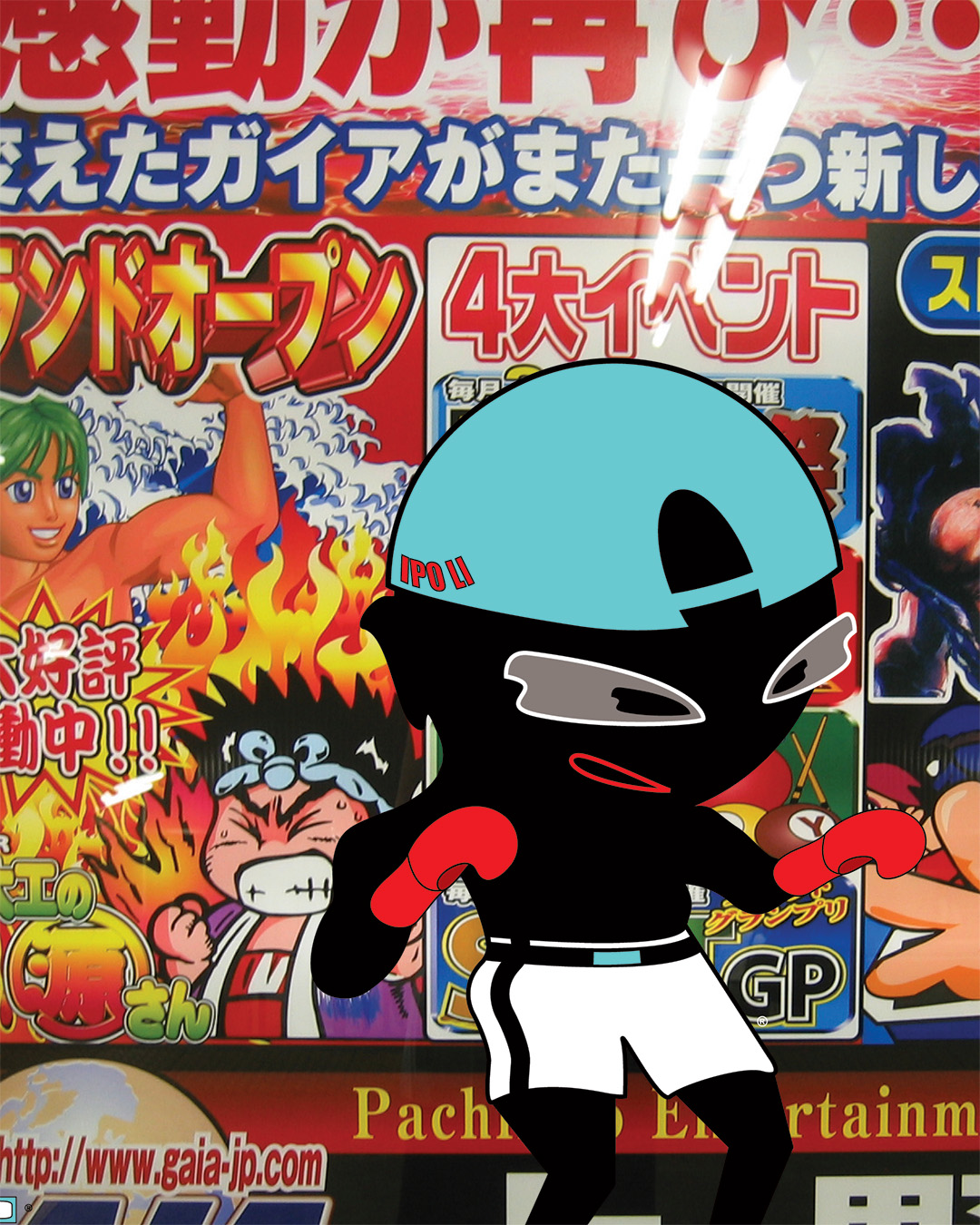
Only then did I realise that she didn’t yet understand that Ipo was a drawn character.
To adults, it was obvious that I had placed drawings into existing, everyday snapshots. But to my niece, Ipo was real.
The image invited imagination, without being intended to deceive anyone.
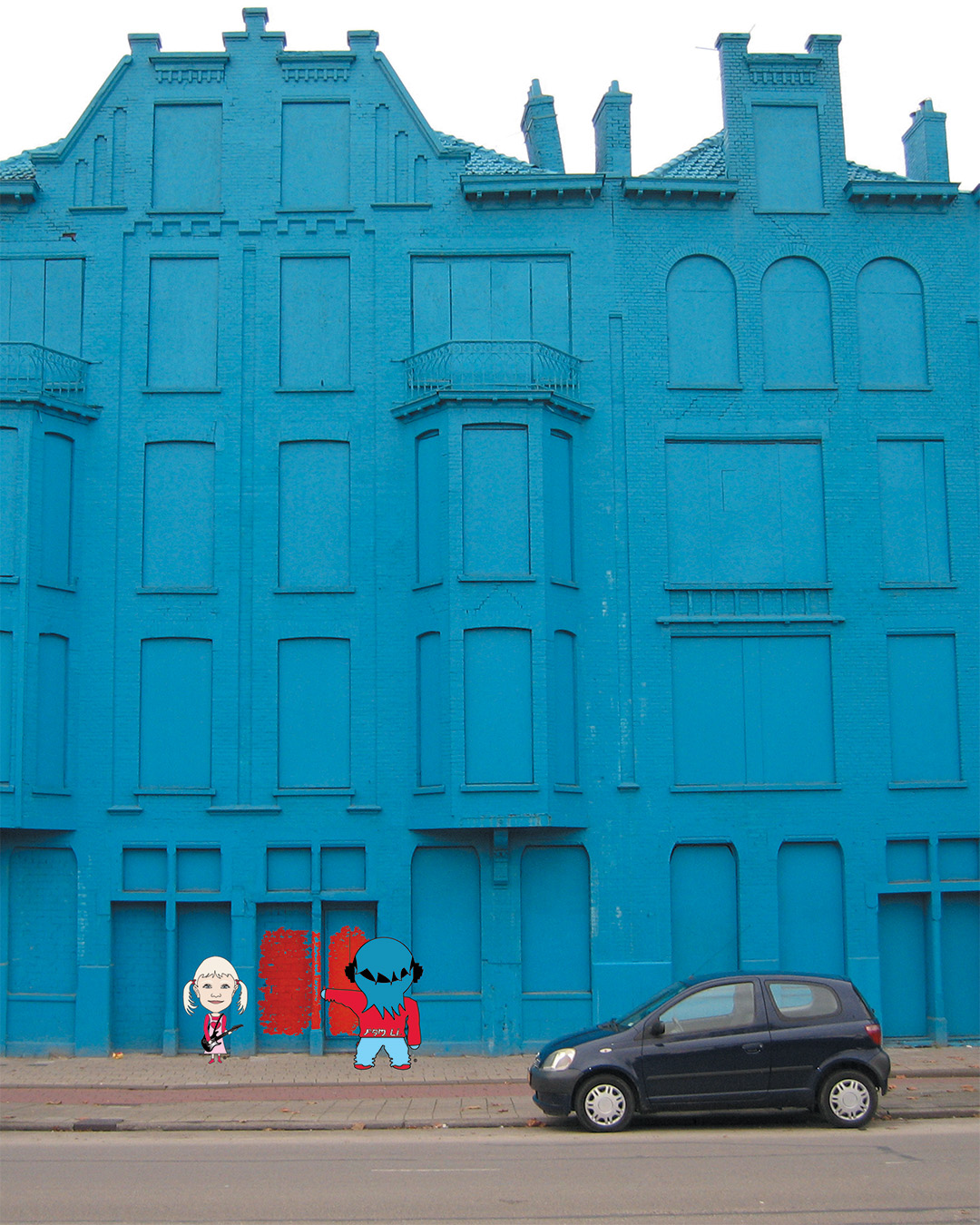
My niece also became part of my visual world. I turned her into the drawn character Friend.Li Eva. She appeared in the exhibition Fam.Li visits … Rotterdam. At the invitation of Wereldmuseum Rotterdam, I took seven snapshots of distinctive locations in Rotterdam. The blue houses were one of those locations.
These days, more and more AI videos appear in my feed in which reality and fiction are almost impossible to distinguish.
Like a video in which a child knocks over a carefully arranged sequence of dominoes. The builders react in despair. You feel for them, until you discover that the event never actually happened.
Or children sliding down a mountain who suddenly disappear over the edge of a ravine. At first, you’re shocked. Then you realise that what you’re seeing is impossible. The event isn’t real. But your emotional reaction to it is.
What happens to that emotion when you discover that the image was created with AI? Does the meaning of what you’ve seen disappear? Or does only the way you interpret it change?
An imaginary image can move us, inspire wonder or make us think. Art doesn’t have to depict an existing reality to have meaning. But there is a difference when a fictional event is presented as though it actually happened.
I use AI myself to give form to my artistic ideas, just as I have worked with different media for the past 25 years.
In my ongoing slow movie Fam.Li visits … Baarnse Bos (@heartworldbypetrahart), I still work with a drawn 2D character placed into existing snapshots. Just as in my earlier Fam.Li work, the combination of drawing and photography remains visible. AI helps me create new scenes, but the fiction remains recognisable.
Recognisable fiction invites imagination.
Fiction that presents itself as reality can undermine our trust in what we see.

Reacties